
Our School
Accreditations & School Structure
A British-based international education, fully aligned with Indonesian regulations
At our school, students follow the British Curriculum from Early Years onwards. Alongside this, we also meet Indonesian curriculum requirements so that students are eligible for Indonesian school certification. Our school holds both TK and PKBM accreditation and operates under the legally required yayasan foundation structure.
This page explains what each of these terms means, why they matter, and how they support your child’s education.

Our Accreditations
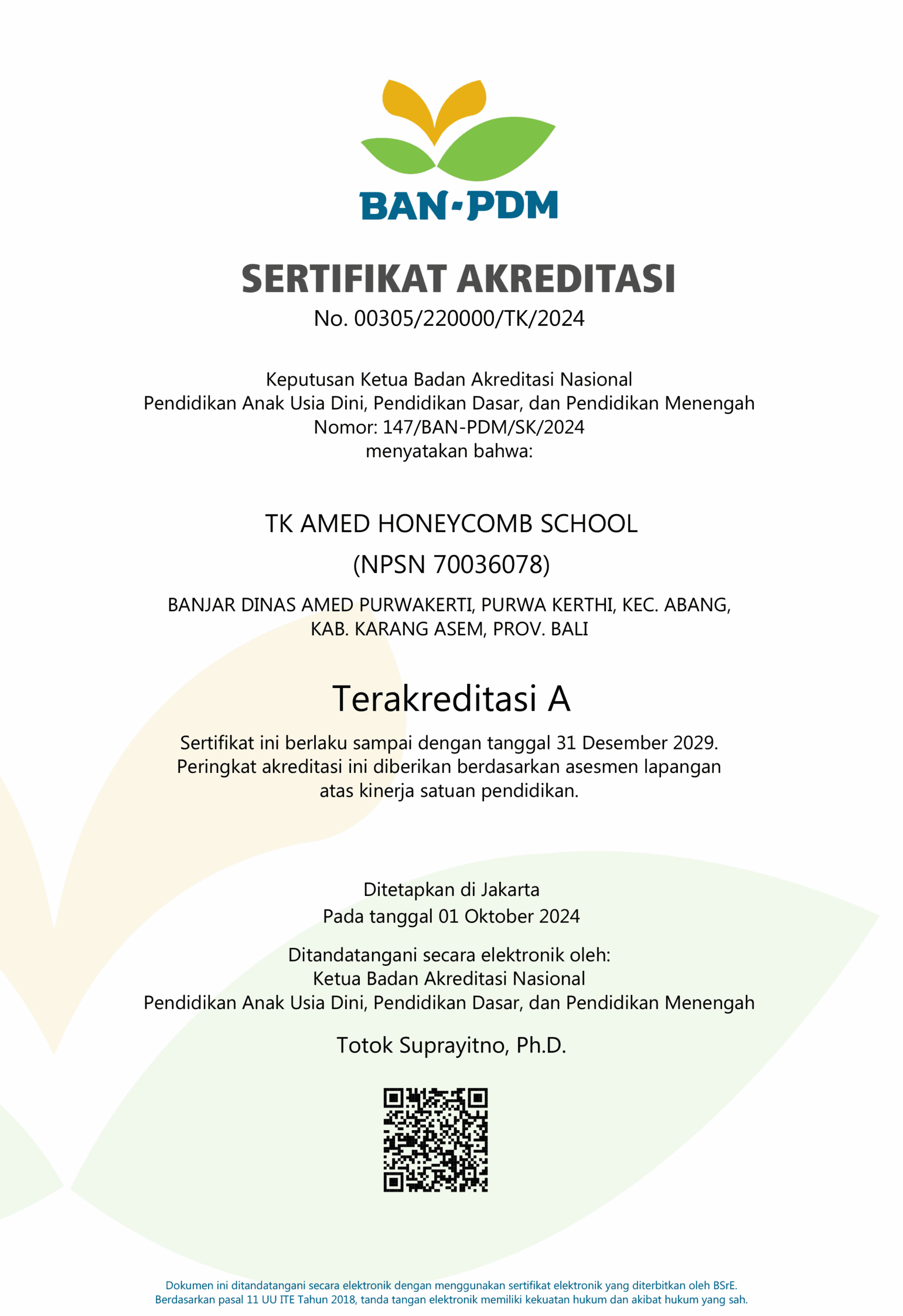
TK Accreditation (Early Years Education)
In Indonesia, early-years education is known as TK (Taman Kanak-Kanak).
Our Early Years programme is built on the British Early Years Curriculum, while also incorporating the Indonesian components required for TK certification.
TK accreditation is conducted by BAN PAUD dan PNF, the national accreditation body responsible for evaluating early-years institutions across Indonesia.
This process ensures that our Early Years environment meets national standards for safety, staffing, safeguarding, curriculum expectations, and overall educational quality.
Our Early Years (TK) level is accredited at Level A, the highest rating awarded by BAN PAUD dan PNF. This reflects the quality of our learning environment and our compliance with national standards.
PKBM Accreditation
Many international schools in Indonesia also hold PKBM accreditation. PKBM stands for Pusat Kegiatan Belajar Masyarakat, or “Community Learning Centre”.
A PKBM licence is part of Indonesia’s national education framework and provides the recognised Indonesian pathway needed for schools that deliver an international curriculum. Schools hold PKBM accreditation to meet national regulatory requirements and to ensure students are eligible for Indonesian school certification.
PKBM accreditation is granted by BAN PAUD dan PNF, the national accreditation body.
In practice, PKBM accreditation does not change the core British curriculum that students experience in the classroom. It is a structural requirement within the Indonesian education system that operates alongside our international programme.

Why Schools in Indonesia Operate Under a Yayasan
All private schools in Indonesia must operate under a non-profit foundation, known as a yayasan. This is a legal requirement for education providers.
A yayasan:
• Holds the school’s official operating permits
• Ensures financial transparency and non-profit operation
• Oversees compliance with Indonesian education regulations
• Provides long-term governance, continuity, and accountability
This structure allows the school to deliver the British Curriculum while meeting everything required by Indonesian law.
Important note for families:
A yayasan does not influence the academic programme.
It is a governance structure, not a curriculum body.


